
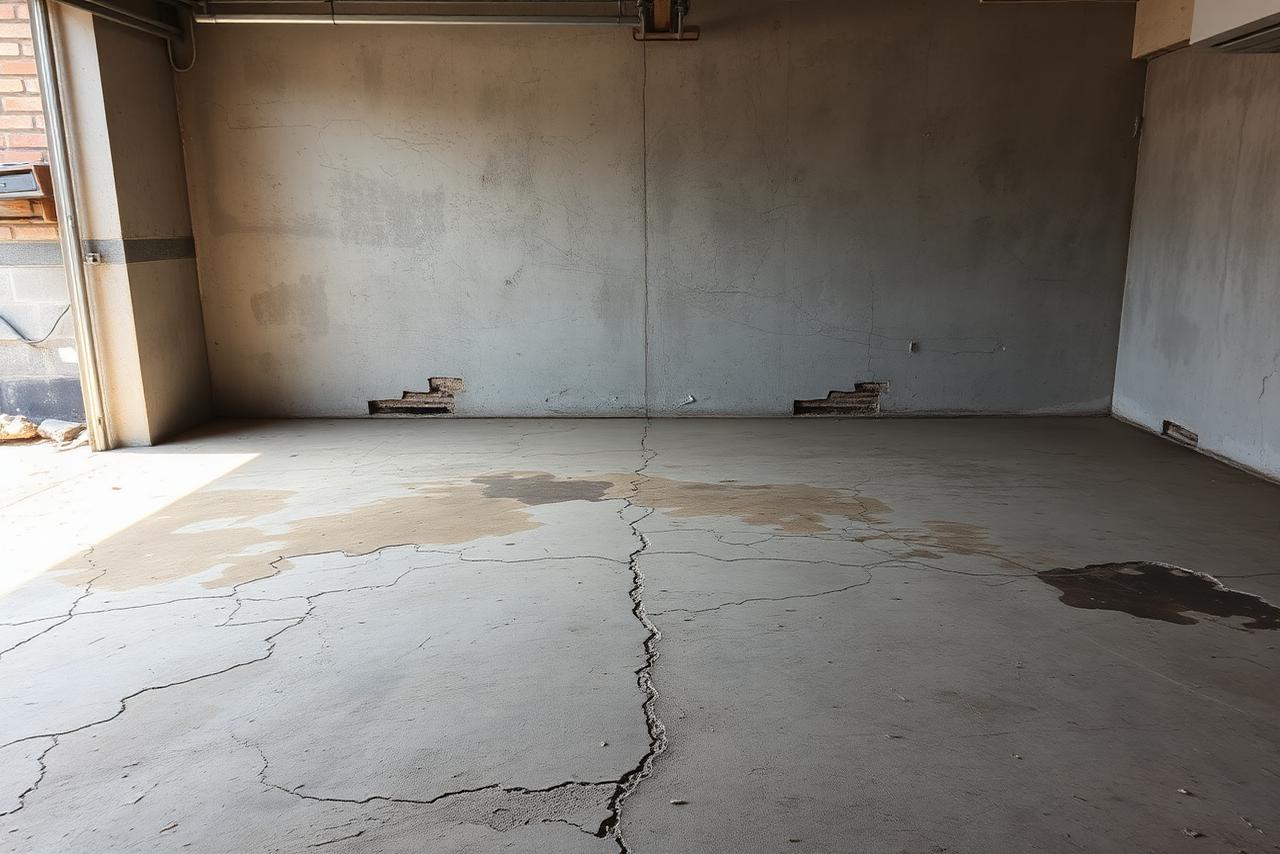
Why coatings fail
Almost always adhesion. A slab that was acid etched or simply cleaned instead of mechanically ground never gave the coating a profile to grip, so the floor releases in sheets under hot tires. Oil contamination left in the concrete produces the same result in patches.
The other common causes are moisture vapor pushing a coating off from underneath, product applied outside its temperature or humidity window, and thin DIY kits that were never engineered for vehicle traffic in the first place.
Assessment before anything else
We test adhesion across the floor, check for moisture, and identify how much of the existing system is sound. That determines whether the job is a spot repair, an abrade-and-recoat, or a full removal and reinstallation.
Quoting a recoat without that assessment is how a floor fails twice. We will not do it.
- Adhesion testing across the slab
- Moisture evaluation on below-grade and slab-on-grade floors
- Identification of contaminated and delaminated zones
Removal and reinstallation
Where the existing system has to go, it is ground off with vacuum-shrouded diamond equipment and the slab is taken back to a clean, open profile. Cracks and joints are then routed and filled, spalled areas patched, and the new system installed the way it should have been the first time.
Removal adds cost and a day or more of labor, which is why the preparation on a first installation is worth paying for.
Refreshing a floor that is simply worn
A well-bonded floor that has just lost its gloss or picked up traffic scuffs is a different job. The topcoat is screened and abraded, the floor is cleaned, and a fresh clear coat goes on — often a one-day visit that resets the appearance for years.