
Epoxy, polyaspartic and urethane
Epoxy builds thickness, bonds hard to prepared concrete and is the workhorse body coat for most systems. It is not UV stable on its own and cures slowly in the cold, which matters in a New England winter.
Polyaspartic cures fast — often same-day return to foot traffic — stays color stable under sunlight and tolerates a wider temperature window. We use it most often as the topcoat over an epoxy body coat, and as a full system where downtime has to be minimal.
Urethane topcoats sit between the two, adding abrasion and chemical resistance in commercial kitchens and production areas.
- Epoxy — build, adhesion, economy
- Polyaspartic — speed, UV stability, cold tolerance
- Urethane — abrasion and chemical resistance
Matching the system to the slab
An on-grade attached garage, a below-grade basement and a 40-year-old industrial slab are three different problems. We look at slab age, moisture behavior, existing coatings, contamination and the traffic the floor takes, then specify the primer, body coat and topcoat around that.
A moisture-mitigating primer, an oil-tolerant primer or a cementitious resurfacer may all be part of the answer before any decorative layer is discussed.
What a coating will and will not fix
A coating seals a porous slab, stops concrete dust, resists salt and chemicals, and gives you a surface that cleans. It does not repair a structurally failing slab, stop active water intrusion, or level a floor that pitches badly. Where those are the real problem, we say so during the estimate instead of coating over them.
Where each system ends up
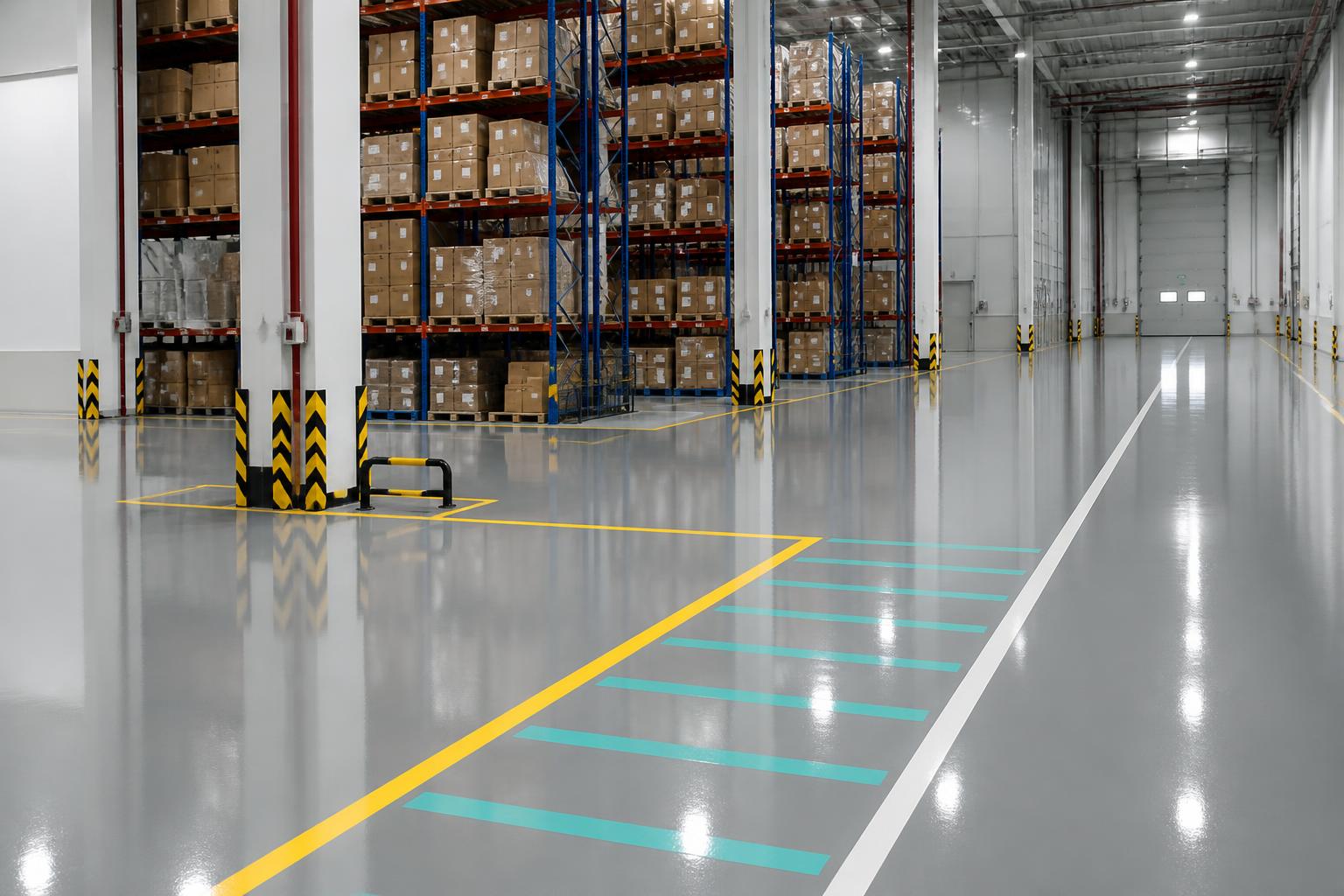
Residential garages and basements get flake or solid color over an epoxy body coat with a polyaspartic topcoat. Warehouses, shops and back-of-house commercial floors get a high-build epoxy or a urethane-topped system sized to the traffic. Showroom and feature spaces get metallic.